
Cybersecurity for SMEs: 5 vulnerabilities that your current website probably has (and how to close them)
Discover the most common web vulnerabilities that expose SMEs to cyberattacks and learn how to protect your business, your sales and your reputation.
There is a very dangerous belief among business owners: thinking that “hackers only attack giant corporations or banks because that’s where the money is”. This false sense of security is exactly what cybercriminals are looking for.
The reality is that modern attackers use automated programs (bots) that scan the internet 24 hours a day looking for any vulnerable websites. For them, it doesn’t matter if you sell shoes locally or if you are a B2B consulting company; If your place has an open door, they will enter.
According to multiple global cybersecurity reports, more than 40% of cyberattacks are specifically directed at small and medium-sized businesses (SMEs). The reason is simple: they tend to have weaker technological defenses, making them the perfect target.
A successful attack doesn’t just mean that your page stops working. It involves theft of sensitive customer data, loss of sales during downtime, possible legal fines and, the hardest blow of all: a loss of reputation that is almost impossible to recover.
If you have a website or an Ecommerce, it is time to check if you are leaving the door open. Here we present the 5 most common vulnerabilities in SME websites and how to close them.
1. Outdated Plugins and Templates (The Most Common Backdoor)
The vast majority of SMB websites are built on platforms like WordPress using pre-made templates and dozens of “plugins” (small programs that add functions such as galleries or shopping carts).
The problem arises when the agency that made the website delivers the project and disappears. Months later, the plugin’s creator discovers a security flaw and releases an update to patch it. If no one in your company clicks “update,” that failure becomes a backdoor. Hackers have lists of these known flaws and They use them to take complete control of your website without you realizing it.
2. Unprotected forms and Spam
That simple “Contact Us” form can be a double-edged sword. Malicious bots look for forms that have no security measures (such as invisible CAPTCHA systems) to try to inject malicious code into your server.
Instead of typing “Hello, I want information,” they type hidden computer commands. If your website code is not programmed to filter and sanitize these responses, the attacker could trick your server into revealing information from your database or send thousands of spam emails using your domain, causing your own commercial emails end up in your clients’ spam folder.
3. Lack of SSL certificates and dubious payment gateways
If your company’s web address still says “HTTP” instead of “HTTPS,” and your browser displays a “Not Secure” sign, you’re losing customers every minute.
The SSL certificate is responsible for encrypting (mixing and protecting) the information that travels from your client’s computer to your server. If someone enters their credit card information or password on a website without SSL, that information travels exposed, as if it were written on a public postcard. In an Ecommerce, guarantee That your payment gateway is integrated in a safe and secure way is the number one requirement to generate trust and close sales.
4. Weak passwords and shared access
The weakest link in cybersecurity is usually the human factor. It’s alarmingly common to see an entire work team using the same user “admin” with a password like “Company2024.”
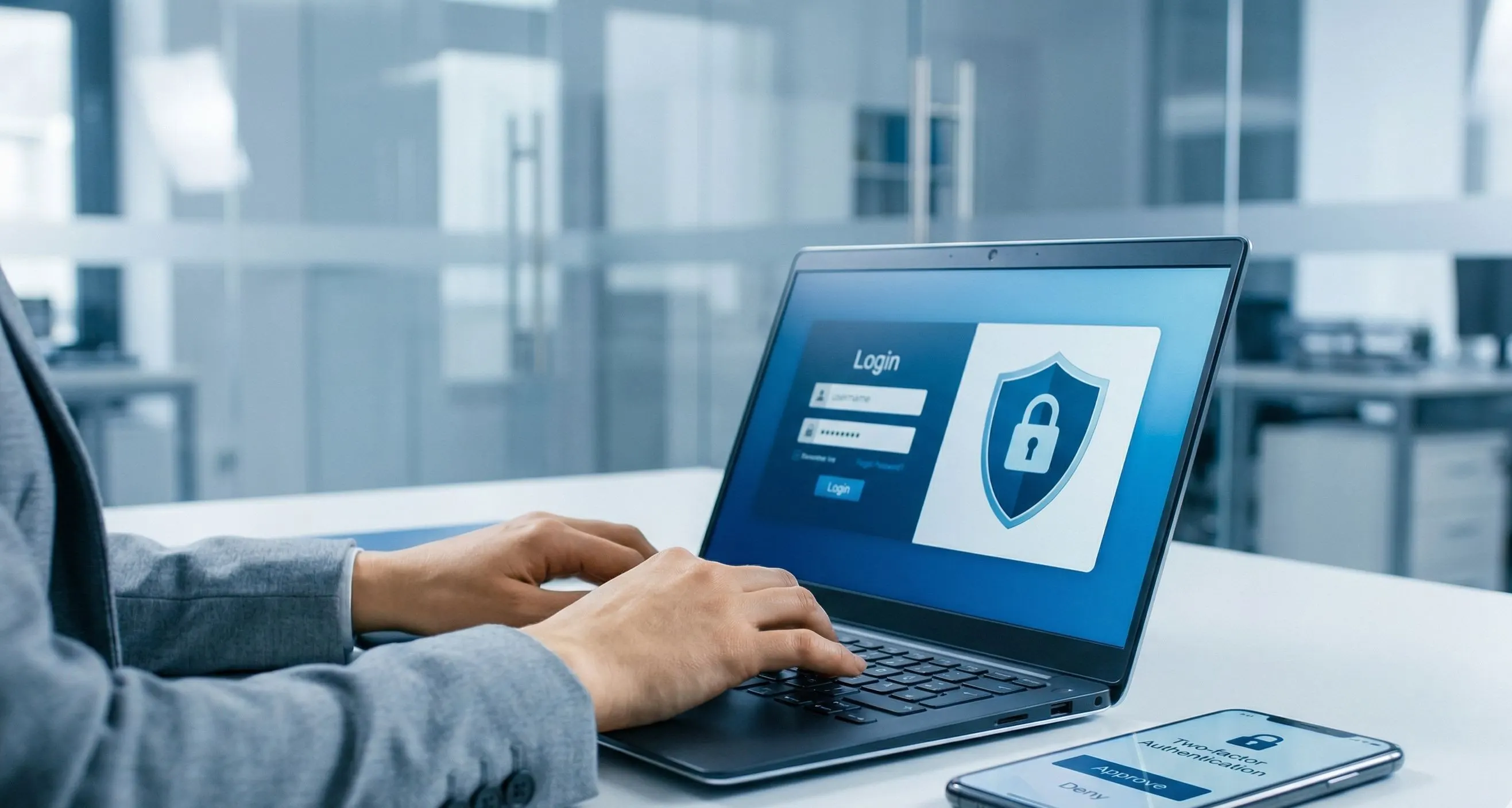
If an employee leaves the company, or if one of the devices they log in from is infected with a virus, the entire platform is compromised. It is essential to implement strong password policies, create individual users with limited permissions (the blog writer does not have access to the store’s billing, for example). example) and always require two-step verification (2FA).
5. The absence of automated backup copies (Backups)
Imagine this scenario: an attacker manages to enter your website, encrypts all your product and customer files, and demands a ransom in cryptocurrencies to return them to you (an attack known as Ransomware). Or simply, your physical server suffers a catastrophic power failure and the hard drive burns up.
Do you have an exact copy of your website saved outside of that server? How old is that copy? A manual backup from six months ago will be of no use to you if you lose sales and customer records from the last week. Modern businesses need daily automated backups, stored securely in the cloud, to be able to restore the operation in minutes in the event of any eventuality.
Security is not a destination, it is a continuous process
Closing your business on Friday afternoons, leaving it without a key or alarm, is unthinkable in the physical world. Your most important digital branch should be no exception. Cybersecurity is not a one-time expense when building the website; It is a shield that must be constantly kept updated against constantly evolving threats. diary.
Stop crossing your fingers hoping nothing bad happens. At our agency we not only build secure web and Ecommerce platforms from scratch (where the best security practices come in the DNA of the code), but we also offer support plans and monthly web maintenance. We take care of updating your system, monitoring 24/7 attacks and manage your automated backups.
We protect your digital business so you can focus on growing it. Let’s talk about how to shield your platform today?