
Web Accessibility: Why making your site inclusive is not only ethical, but also profitable
Discover why web accessibility is not only an ethical issue, but a profitable strategy to improve your SEO, UX and increase your online sales.

When companies plan to redesign their website or launch a new Ecommerce, the priorities are usually clear: a stunning design, fast integrations and optimized sales funnels. However, in the midst of these meetings, there is a critical element that is often ignored as an “extra” or something that “just affects a minority”: web accessibility.
Web accessibility is the practice of building sites that can be used by all people, regardless of their visual, auditory, motor or cognitive abilities. The great myth of the corporate world is to think that designing for accessibility is an act of pure charity. The reality is that it is a powerful strategy of business.
According to global disability economics studies, people with disabilities and their families control more than $8 trillion in disposable income globally. Ignoring accessibility literally means closing the door of your store in the face of this immense market.
Google is blind (The direct impact on your SEO)
Many marketing managers are surprised to discover that their greatest ally in search engine optimization (SEO) is, ironically, accessibility. To understand this, you have to understand how Google works.
The Google “bots” or crawlers that analyze your website to decide where it will appear in search results do not have eyes. They can’t appreciate the aesthetics of your color palette or understand the information in an image just by “looking at it.” Google bots read your website exactly the same way a website does. screen reader, the software used by visually impaired people to browse the Internet.
If your website uses a clean code structure, logical headers (H1, H2, H3) and alternative texts (alt text) that correctly describe the images, you are making life easier for a blind user. But at the same time, you are giving Google the perfect context so that it understands what your page is about and positions you for it. above your competition. Accessible code is the cornerstone of impeccable technical SEO.

Accessibility means better experience for everyone
In the world of design and architecture there is something called the “ramp effect.” Sidewalk ramps were originally created for people in wheelchairs, but today they benefit parents with baby strollers, travelers with suitcases, and delivery drivers. Exactly the same thing happens in web development: designing for the extremes improves user experience (UX) at the center.
Consider these everyday examples:
- Proper color contrast: Originally intended for people with low vision or color blindness, good contrast ensures that any potential customer can read your product descriptions while walking down the street with the sun reflecting on their phone.
- Subtitles on videos: Essential for the deaf community, but they are also the reason why 80% of users watch videos on social networks until the end when they are on public transport, in the office or without headphones.
A fluid, frictionless experience dramatically reduces your bounce rate (users who leave your website instantly) and increases dwell time, metrics that search engines love and that translate directly into more conversions.
The hidden risk of poor code
Nowadays it is very easy to build a website using generic templates or drag-and-drop visual builders. The problem is that, beneath that attractive facade, these tools often generate bloated, messy, and, above all, inaccessible code.
One of the most common failures in poorly built sites is the inability to perform keyboard navigation. People with certain motor disabilities do not use a mouse; They navigate by jumping from one link to another using the Tab key. If the “Add to Cart” buttons or drop-down menus of your Ecommerce are not programmed to be accessible via keyboard, you are physically preventing those customers from buying from you.
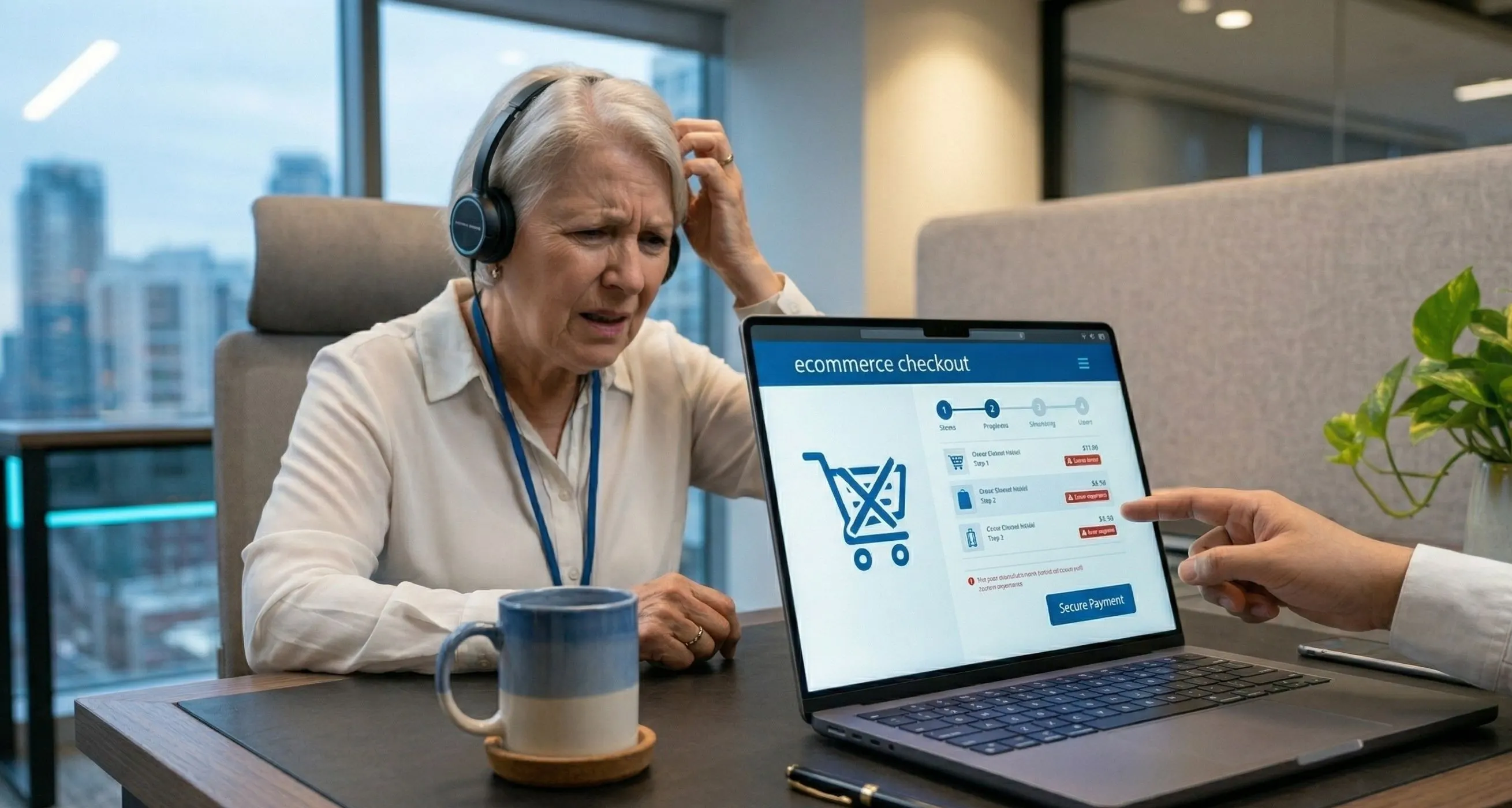
In addition to lost sales (the dreaded cart abandonment), poor code exposes you to legal risks. In many countries, digital accessibility laws are becoming stricter, and companies face costly lawsuits for having platforms that discriminate against users with disabilities.
It’s time to build for the future
Web accessibility is not an add-on that is added at the end of a project; It is a quality standard that must be integrated from the first line of code. Making your website inclusive improves your ranking on Google, elevates the experience of all your users, protects your company from legal risks and, most importantly, opens your doors. to a massive market that your competition is ignoring.
Don’t leave money on the table or exclude potential clients. If you’re not sure if your current website meets accessibility standards, our agency can help. We offer deep technical audits, specialized support to optimize existing sites, and the development of web and Ecommerce platforms 100% inclusive from scratch.
Let’s talk today and turn your website into your best sales tool, for everyone.